Static vs Dynamic QR Codes: What's the Difference?
August 16, 2026
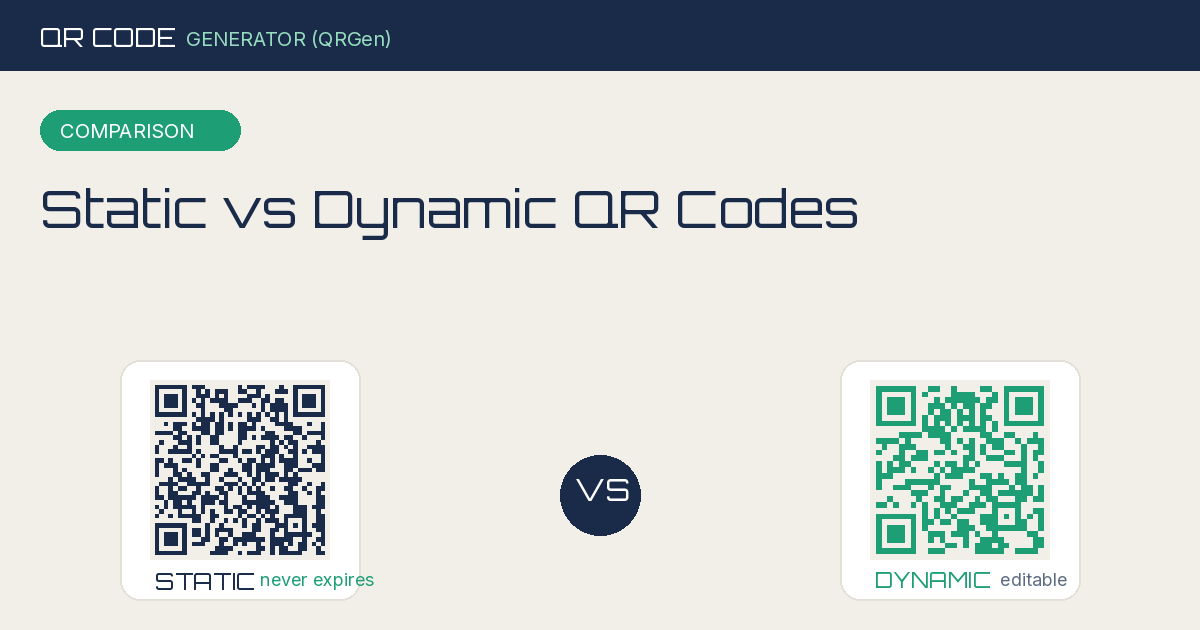
Every QR code falls into one of two categories: static or dynamic. They can look completely identical — the same black-and-white pattern — but under the surface they work in very different ways. Choosing the wrong one can cost you money you didn't need to spend, or leave you without a feature you actually needed.
This guide breaks down exactly how each type works, what they cost, and how to decide which is right for you.
What is a static QR code?
A static QR code has the information encoded directly into the pattern itself. When you create a static QR code for a website link, that link is literally baked into the arrangement of squares. Nothing sits between the person scanning and the destination.
Think of it like printing an address on an envelope. Once it's printed, it's fixed — the envelope will always point to that address.
Because the data lives inside the code, static QR codes have three defining traits:
- They never expire. As long as the destination (a website, a WiFi network, a phone number) still exists, the code keeps working — forever.
- They can't be edited. If you need to change where the code points, you have to generate a brand-new code and reprint it.
- They can't be tracked. There's no server in the middle counting scans, so you won't know how many people scanned it or where.
Static codes are free to create, work offline once generated, and are ideal for information that won't change.
What is a dynamic QR code?
A dynamic QR code doesn't contain your final destination. Instead, it encodes a short redirect link that points to a server, and that server forwards the visitor to wherever you've set the code to go.
Think of it like a mail forwarding service. The address on the envelope stays the same, but you can change where the mail actually gets delivered — any time you want, without reprinting anything.
That redirect layer is what gives dynamic codes their extra powers:
- They're editable. You can change the destination after the code is printed. Same code on the poster, new landing page behind it.
- They're trackable. Because every scan passes through a server, you can count scans, see rough locations, devices, and times.
- They can do advanced things like redirect to different pages based on the user's country or device.
The trade-off: dynamic codes almost always require a paid subscription, and they depend on that redirect service staying online. If the company hosting your redirect shuts down or you stop paying, the code can stop working — even though the pattern is still perfectly scannable.
Static vs dynamic: side-by-side
FeatureStaticDynamicCostFreeUsually paid (subscription)Expires?NeverOnly if the service/subscription endsEditable after printing?NoYesScan tracking & analyticsNoYesDepends on a third-party server?NoYesBest forFixed info, print, personal useCampaigns needing edits or analytics
Which one do you actually need?
Here's the honest answer most guides won't give you: most people need a static QR code.
Choose static if:
- The information won't change (your website, your WiFi password, your contact details).
- You want it free and permanent, with nothing to maintain.
- You don't need scan analytics.
- You're printing something long-lasting like business cards, signage, or packaging where you won't reprint anyway.
Choose dynamic if:
- You genuinely need to change the destination after printing (for example, a poster that points to different seasonal offers).
- You need scan analytics for a marketing campaign — how many scans, when, and roughly where.
- You're running a large campaign where the redirect fee is justified by the data you get back.
A quick reality check: many businesses pay monthly for dynamic codes when a free static code would have done the job perfectly. If you're not editing the destination or reading analytics, you're paying for features you'll never use.
A note on "scan tracking"
Some free tools advertise "trackable" QR codes. Be aware that scan tracking requires a dynamic code and a server counting those scans — which is why those tools eventually ask you to upgrade or sign up. There's no such thing as a truly free, trackable QR code, because someone has to run and pay for the tracking infrastructure.
The bottom line
Static and dynamic QR codes solve different problems. Static is free, permanent, and private — ideal for fixed information and the right choice for the vast majority of uses. Dynamic is editable and trackable, but it costs money and depends on a live service.
If your link, WiFi, or contact details aren't going to change, a static QR code is all you need — and you can create one in seconds.
Create a free static QR code now → with QR Code Generator (QRGen). No sign up, no watermark, no expiry.